
Whole Prey and Meal Size in the Natural Diet of the Cat
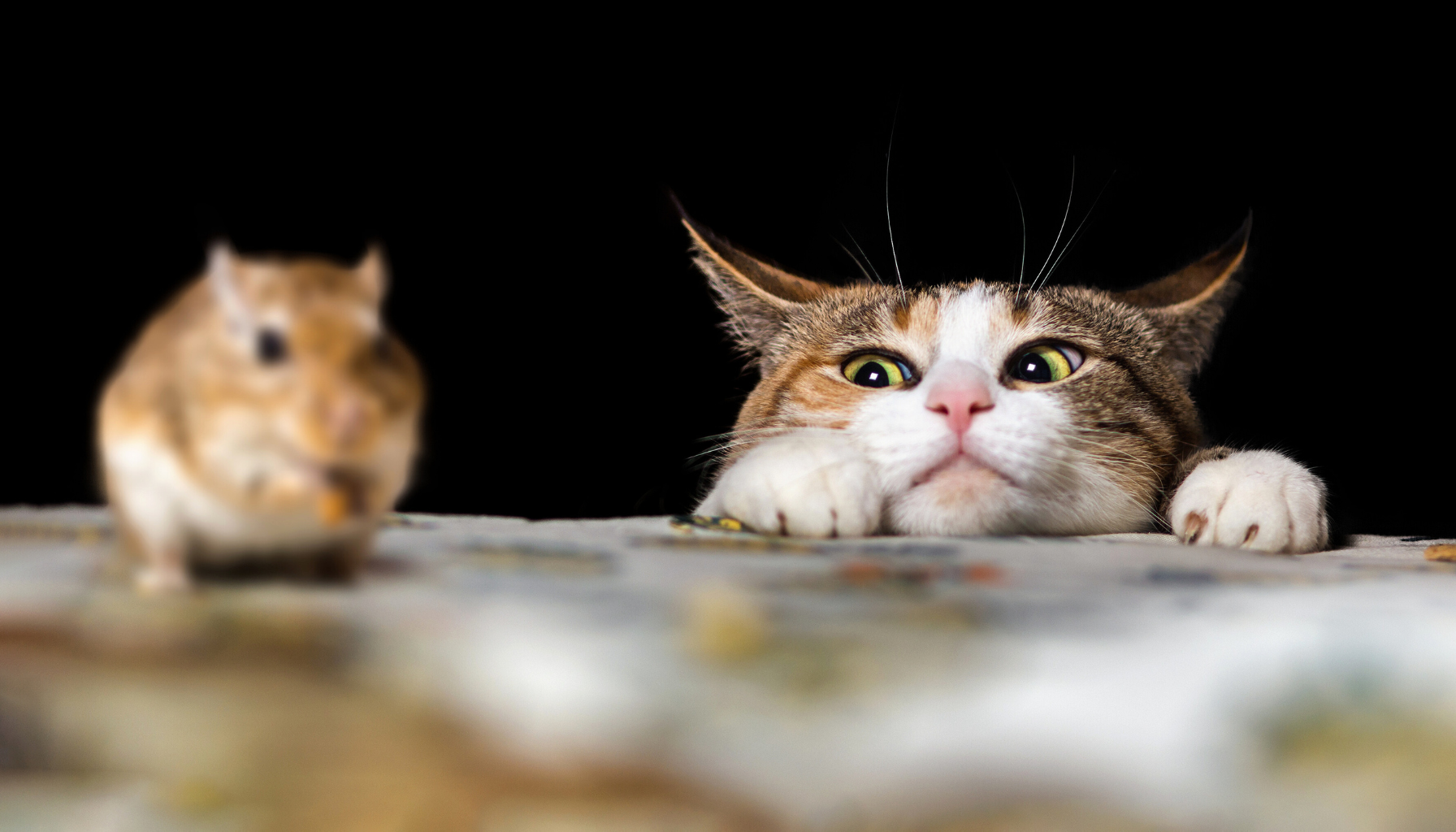
The domestic cat (Felis catus L.) has been introduced into most of the world’s terrestrial ecosystems, sometimes accidentally and sometimes deliberately. Cats have accompanied humans throughout all phases of exploration and colonization, and have often adapted to new environments so effectively that in many places they have become the dominant predator.
Such widespread presence of cats on all continents translates into an exceptionally broad and diverse spectrum of feline prey, as we also know from the article discussing the composition of their natural diet.
Equally large are the differences in the size of feline meals - from insects weighing less than a gram to cattle weighing several hundred kilograms. With such diversity in the menu of this small predator, is it possible to determine a standard meal size for a cat fed a whole prey diet? This is the question we seek to answer in the article below.
Wild cats, feral cats, and domestic cats
The issue of similarities and differences in the diets of wild, feral, and domestic cats has already been discussed on the RAW PETFOOD blog, but for clarity, it is worth covering it here as well.
The studies on free-living cats included in this article cover three groups:
- domestic cats, understood as animals largely dependent on human households,
- feral cats, which to some extent make use of resources provided by humans but obtain a significant portion of food through hunting,
- wild cats, completely independent of human households.
The decision to include all three types in the analysis results from the fact that, according to some studies, their trophic niches may overlap by as much as 91.7%. The diet of domestic, feral, and wild cats - apart from the contribution of food originating from humans - is very similar and differs mainly due to the spectrum of potential prey available in a given environment, not due to the category to which a particular cat belongs. Some data also come from studies conducted on cats kept in controlled laboratory conditions.
What size prey do cats hunt in nature?
Domestic cats are an interesting exception compared to other predators living on our planet. In sources concerning the diet of wild animals, we can find models that quite accurately predict the approximate prey size for a given predator type.
Thus, if we were to classify the cat simply as a carnivore, its average prey should weigh about 11% of its body mass. If we classified it as a large predator, the average prey would be about 13% of its body mass, and if as a small predator - about 0.23%. If we considered the cat an insectivore, we could expect its average prey mass to be around 0.52% of the hunter’s body weight.
And what does the cat say?
The average mass of feline prey in the referenced studies was around 41 g, while the median body mass of adult vertebrates eaten by cats was just over 45 g. Researchers believe this implies an average prey mass of 1-1.1% of the predator’s body weight.
Does this mean that the optimal whole prey meal weighs 41-45 g or 1% of the cat’s body weight? Unfortunately, it is not that simple. These values refer to average prey weight, including both species and individuals much heavier and much lighter than the given values. The matter is further complicated by the fact that cats eat animals across nearly the entire size range available to an average predator.
How do large animals end up in a cat’s diet?
Studies on the diet of cats sourcing their food from nature have recorded both emus weighing over 30 kg and cows with an average mass of around 760 kg. How is it possible that such large animals become part of the diet of a predator that represents only a fraction of their size?
Some researchers explain this by referring to opportunism, which is necessary for survival in the varied yet consistently demanding ecosystems inhabited by cats. Predators do not always feed on optimal prey; sometimes the most accessible prey must suffice. Even if smaller prey is preferred, the relatively simple digestive systems of cats allow them to handle large amounts of food in a short time.
It is true that many of the largest species recorded as feline prey were taken as very young individuals. However, this does not change the fact that the ability to hunt surprisingly large prey is impressive. In Australia, where feline diet is studied particularly intensively, there is ample evidence that even medium-sized marsupials fall victim to cats. Wallabies, which are such marsupials, pose a significant hunting challenge due to their ability to escape quickly and defend themselves effectively with strong kicks. Despite these obstacles, much indicates that cats are capable of successfully capturing and partially consuming individuals weighing close to the mass of the hunting predator. Most often, however, the prey consists of young individuals lacking experience and awareness of predators, as well as females whose ability to flee and defend themselves is limited by the presence of joeys in the pouch.
A cat’s meal is also not always an animal killed by the cat itself. Numerous studies show that Felis catus L., contrary to popular belief, does not avoid carrion. In one study of 352 cats, carrion consumption was recorded in 27 individuals, corresponding to nearly 8% of the study population. Among such “prey” were livestock (sheep and pigs), as well as a rabbit and, most interestingly, several samples of unidentified species already containing larvae.
What size rodents do cats hunt?
Cats are widely regarded as specialists in hunting rodents. Indeed, studies confirm that this group of animals represents the dominant part of their diet. The most commonly eaten rodents include the house mouse, vole, wood mouse, and sometimes rats.
Many studies indicate that house mice are the most common rodent prey. In one study, more than half of the observed cats ate mice. The average mass of the mice was 19 g, and up to 30 individuals were sometimes found in a cat’s stomach at once.
Compared with smaller rodents, rats are a greater hunting challenge for an average cat. Rats can be large and aggressive; hunting them requires experience and skill. Researchers cite these facts as the reason why rats are recorded less frequently in feline diets than smaller, easier-to-catch mice.
Among the rats hunted by cats, one study reported mostly young individuals with an average mass of about 144 g, while the average mass of rats available in the environment was 385 g. More than three-quarters of recorded prey weighed 200 g or less. Similarly, in another study, cats hunted mainly rats under 200 g, even though the ecosystem also contained individuals exceeding 600 g. Adult, robust rats and cats coexisted almost peacefully, without aggressive interactions, and the rare chases ended before physical contact occurred.
Overall, in the described studies, cats rarely hunted the older part of the rat population, although it did happen. In one analysis, the largest rat taken by a cat weighed 508 g.
Researchers speculate that the decision to take on the challenge of hunting an adult rat may depend on several factors. First, on the cat’s previous experience with rats and its ability to handle them. A considerable proportion of urban free-living cats are animals that once had owners. Second, on the availability of other food sources - the lower the availability, the greater the cat’s willingness to take the risk.
Another issue is that capturing a rat does not always mean eating it, or at least not eating it whole. With smaller prey, cats usually consume the entire animal, ensuring a full spectrum of nutrients. Taurine, for example, crucial for life, is found primarily not in muscle but in the liver and brain. In the case of rats, however, cats were observed not only to abandon prey but also to selectively consume certain parts.
In one study, about 45% of rats caught by cats were not eaten at all, and the remaining ones were eaten only partially. The most commonly consumed parts were the muscles of the neck and back, the brain, and other internal organs. Even cats that ate almost the whole rat usually left parts of the head, skin, tail, and paws. Anecdotally, my own cats, given rats weighing over half a kilogram, also most often left the heads, paws, and tails uneaten.
How large are the mammals in a cat’s diet?
Rodents are not the only mammals that constitute natural food for cats, which further complicates the search for the optimal weight of a whole prey meal. Although researchers indicate 53.22 g as the average mass of mammals eaten by cats, the spectrum of prey ranges from the Etruscan shrew, weighing just over 2 g, to the domestic cow, weighing almost 800 kg, consumed as carrion.
In some studies, a tendency among cats to select prey of a certain size was observed (this applied especially to rabbits and voles). In others, however, it was shown that even relatively small cats are capable of eating large prey. Two individuals weighing 1.4 kg and 1.5 kg were recorded as successfully hunting European rabbits with an average mass of about 1.8 kg.
How large are the reptiles cats hunt in nature?
The matter is only slightly less complex in the case of reptiles, which also often fall victim to cats. Much of the research concerning this part of the feline diet comes from Australia, where the topic is particularly well documented due to the fact that cats pose a serious threat to the continent’s native fauna.
Cat predation has been recorded for about one quarter of all known Australian reptile species. Although 21.35 g is indicated as the average mass of reptiles hunted by cats, the range is extremely wide: from the pygmy skink weighing around 0.5 g, to the green sea turtle, with an average mass of 133 kg. Between these extremes one finds monitor lizards, agamas, and snakes, including venomous and potentially dangerous species.
The size of birds, amphibians, and invertebrates in the feline diet
The diet of wild cats includes a significant number of birds, particularly species nesting or feeding on the ground. Among the smallest birds eaten by cats is the ruby-throated hummingbird, weighing around 3 g, while among the largest is the emu (about 34 kg), with an average mass of feline avian prey of 62.42 g.
Amphibians, also present in the feline diet, are characterized by a much narrower mass range. The average mass of amphibians eaten by cats has been reported as 13.67 g. The smallest amphibian recorded was the southern brown tree frog weighing 1.69 g, and the largest the American bullfrog weighing around 0.5 kg.
Among the lightest prey hunted by cats are invertebrates, with an average mass of about 0.5 g. The most commonly recorded are grasshoppers, beetles, and woodlice.
Invertebrates are sometimes regarded as a minor, almost supplemental component of the diet of Felis catus. In reality, however, they may constitute an important food source for free-living cats. They are recorded in the diet of about one third of wild and stray cats, although researchers emphasize that their importance may vary depending on location and season. They are particularly valuable on some islands and dry or semi-dry regions, where invertebrates are abundant and other prey is limited or available only seasonally. Invertebrates can also be highly nutritious, especially gravid females, which have higher body mass and elevated lipid concentrations in developing eggs.
Arthropods also provide more water than vertebrates, which some researchers consider the reason for the prevalence of such small prey in the feline diet. Cats are capable of surviving without direct access to water, provided they obtain sufficient moisture from food. What is more, studies have shown that although the intake of drinking water was higher in cats fed dry food, their total water intake was greater when fed wet food or a meat-based diet, even if they did not drink additional water.
One study also indicated that a dog is capable of compensating water loss equal to 8% of its body mass by drinking, while a cat only 4%. According to numerous analyses, the only effective and practical way to increase water intake in cats is to increase the moisture of the food provided.
Calories or the size of the whole prey meal?
It is believed that - similar to many other carnivorous animals - free-living cats generally consume food of constant caloric density. In some studies, cats indeed maintained rather constant food mass intake rather than caloric intake, and did not reduce the amount of food eaten when the caloric density of the diet increased.
Other studies, however, indicate that cats possess mechanisms regulating caloric intake. In experiments where diets with good palatability but differing caloric values were used, cats quickly adjusted the amount of food consumed in order to maintain a stable energy intake. They were also able to maintain their original body weight even when required to increase the energetic cost of obtaining food.
We already know that rats can represent a demanding prey, yet they are a frequent component of the feline diet. Moreover, in some areas rats were the preferred meal compared to less calorie-dense lizards or birds. Researchers point out that this may stem from the feline tendency to seek prey with the highest nutritional value relative to the effort and risk involved. A large rat can theoretically satisfy even a cat’s daily energy requirement, as can a rabbit and other large prey animals.
One large meal or several small ones?
Even if the matter of a cat’s daily energy requirement were definitively settled, another question remains: how should those calories be distributed among meals throughout the day?
We already know that cats are capable not only of hunting fairly large prey, but also of consuming considerable amounts of food in a single meal. Hunting larger prey is in many cases more energy-efficient. And yet, according to common knowledge and the studies analyzed, cats show a preference for consuming many small meals throughout the day.
Researchers propose several possible reasons for this pattern, including the lower energetic cost of capturing and digesting small prey, as well as easier allocation of time among the various activities performed by cats over a 24-hour period. Furthermore, predatory behaviour appears to take precedence over consumption. Cats interrupted eating - even of highly palatable food - to catch another prey item, after which they returned to the previously started meal.
Studies on meal frequency in cats report values ranging from 9 to 20 meals per day, with roughly half occurring during the day and half at night. The frequency of feeding was similar regardless of diet type, with an average of about 16 meals per day. The average mass of a single meal ranged between 4.8 and 5.6 g.
These tendencies persisted even when food was provided only once a day. It was observed, however, that cats ate slightly more when offered fresh food. A larger meal also occurred directly after contact and play with a human. A correlation was also noted between meal size and the duration of eating: larger portions were consumed over a longer period. No relationship was found between meal size and the length of the intervals between meals. Another recurring finding was that the more effort a cat must exert to obtain food, the fewer meals it consumes, and the larger the portions become.
Ultimately, when cats were allowed free access to easily obtainable food, they chose frequent, small meals. Under different conditions, they returned to this pattern as soon as it became possible again.
Whole prey and the size of meals in the natural diet of the cat
Although the analysis of natural feline feeding behaviour may encourage us to seek a definitive answer regarding the “ideal” whole prey meal size, research suggests that such a universal value does not exist. The cat is not an animal consuming a single, fixed category of prey. Its diet encompasses an exceptionally wide range of species with varying sizes, caloric values, and availability. In nature, the feline feeding strategy does not rely on precisely measured portions, but on flexible adaptation to its environment, the type of prey captured, and its own capabilities and preferences.
From the perspective of a caretaker feeding a cat a whole prey diet, this means that the goal is not to replicate one specific meal weight, but to recreate the logic of feline feeding: variety, high moisture content, and the possibility of consuming several small meals throughout the day. The natural diet of the cat consists primarily of frequent, small prey items, occasionally supplemented with a larger catch. Translating these principles into a whole prey diet appears important not only for optimal nutrition, but also for satisfying species-specific needs related to predatory behaviour and the manner in which cats obtain food.
References:
- A global synthesis and assessment of freeranging domestic cat diet, Christopher A. Lepczyk, Jean E. Fantle-Lepczyk, Kylee D. Dunham, Elsa Bonnaud, Jocelyn Lindner, Tim S. Doherty & John C. Z. Woinarski.
- Michael J. Konecny. Food habits and energetics of feral house cats in the Galápagos Islands.
- Széles, G. L., Purger, J. J., Molnár, T., & Lanszki, J. Comparative analysis of the diet of feral and house cats and wildcat in Europe.
- MacDonald, M. L., Rogers, Q. R. & Morris, J. G. Nutrition of the domestic cat, a mammalian carnivore.
- Pearre, S. Jr. & Maass, R. Trends in the prey size-based trophic niches of feral and House Cats Felis catus.
- Patricia A. Fleming, Heather M. Crawford, Clare H. Auckland and Michael C. Calver, Body Size and Bite Force of Stray and Feral Cats—Are Bigger or Older Cats Taking the Largest or More Difficult-to-Handle Prey?
- Childs, J.E. (1986) Size-dependent predation on rats (Rattus norvegicus) by house cats (Felis catus) in an urban setting.
- Glass, G.E.; Gardner-Santana, L.C.; Holt, R.D.; Chen, J.; Shields, T.M.; Roy, M.; Schachterle, S.; Klein, S.L. Trophic garnishes: Cat–rat interactions in an urban environment.
- Dickman, C. R. & Newsome, T. M. Individual hunting behaviour and prey specialization in the house cat Felis catus: Implications for conservation and management.
- Woinarski, J. C. Z. et al. Compilation and traits of Australian bird species killed by cats.
- Collier, G. L. , Kaufman, W. , Kanarek, R., Fagen, J. 1978. Optimization of Time and Energy Constraints in the Feeding Behavior of Cats: A Laboratory Simulation.
- Kanarek, R. B. 1975. Availability and caloric density of the diet as determinants of meal patte s in cats.
- Kane, E., Rogers, Q. R., Mo is, J. G., Leung, P. M. B. 1981. Feeding behavior of the cat fed laboratory and commercial diets [Drinking patterns, voluntary food consumption, appetite].
- Kaufman, 1. W., Collier, G., Hill, W. 1.,Collins,K. Meal cost and meal patterns in an uncaged domestic cat.
- Konecny, M.J. (1987) Food habits and energetics of feral house cats in the Galápagos Islands.
- Murphy, B.P.; Legge, S.M.; Palmer, R.; Dickman, C.R.; Augusteyn, J.; Comer, S.;
- Doherty, T.S.; Eager, C.; et al. Introduced cats Felis catus eating a continental fauna: Inventory and traits of Australian mammal species killed.
Article text: inessiwinska@gmail.com
Recommended

Rats 60/90g

Rats 30/60g

Day-old chicks (chickens) 1kg

Mice 16/30g 1kg
![Day-old chicks (chickens) [K] 1kg](https://static1.raw-petfood.pl/hpeciai/c212ae5c7714ffb9e0a330a76da6ba65/pol_il_Piskleta-jednodniowe-kurczaki-K-1kg-166.jpg)
Day-old chicks (chickens) [K] 1kg

Quails 20/30g 10pcs

Quails M 80/120g

Quails M 80/120g PACKAGE

Mice black 6-40g 1kg (S-XXL)


Mice 30g+ 1kg (XXL)
![Mastomys 20-30g [10 pieces]](https://static5.raw-petfood.pl/hpeciai/261119f1fa36d4b9205a7f137ff9d395/pol_il_Mastomys-20-30g-10-sztuk-283.png)
Mastomys 20-30g [10 pieces]
![Mastomys 30-40g [10 pieces]](https://static3.raw-petfood.pl/hpeciai/4cd70ff90704c3aee67814645613cdee/pol_il_Mastomys-30-40g-10-sztuk-284.png)
Mastomys 30-40g [10 pieces]
![Dwarf Hamster 20/60g [10 pieces]](https://static3.raw-petfood.pl/hpeciai/2f1121295a9246385792116c8d1d9900/pol_il_Mrozony-chomik-karlowaty-20-60g-10-sztuk-286.png)